
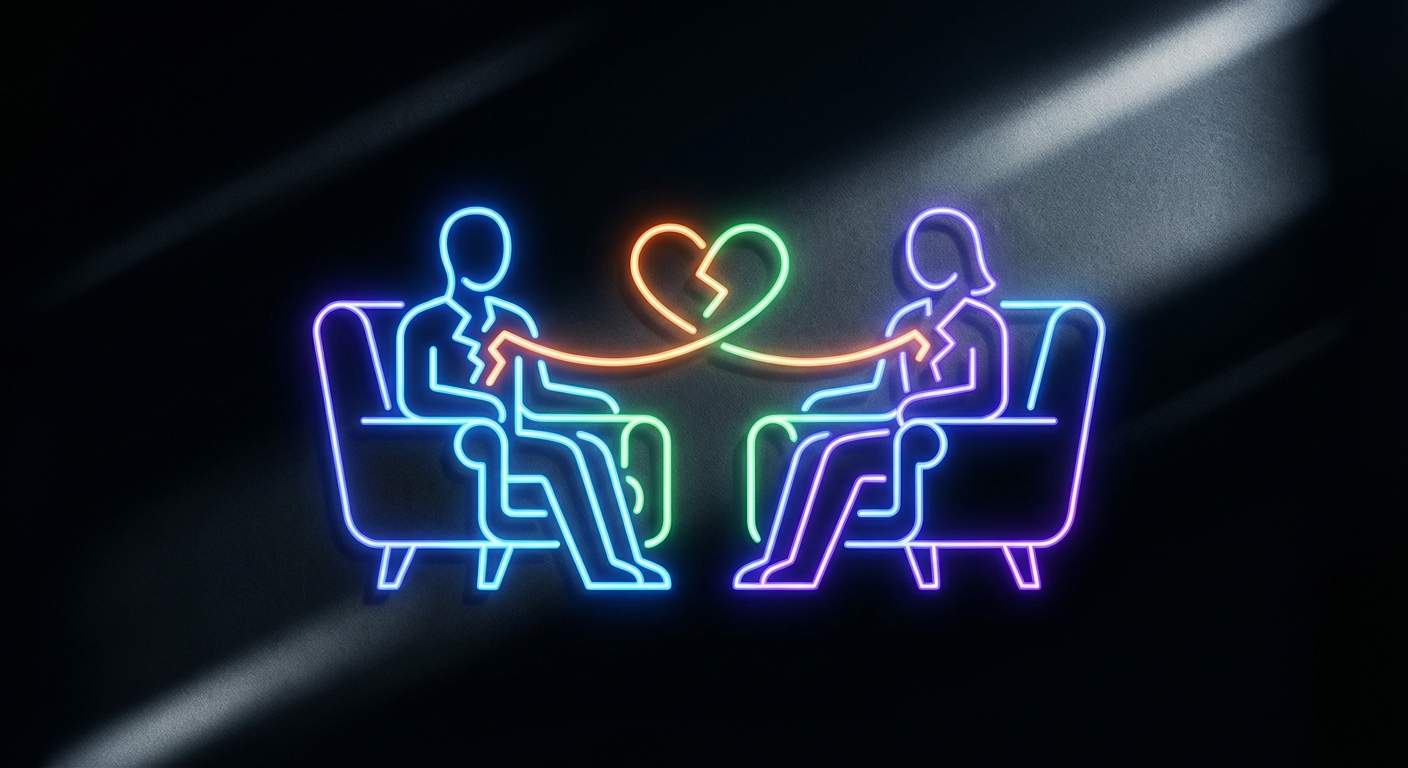
Understanding How Grief Impacts Relationship Dynamics
Loss has a way of rearranging the furniture in your mind without asking for permission. When you are part of a partnership, that internal disruption doesn’t stay contained within one person. It spills over into the kitchen, the bedroom, and the quiet moments between breaths. You might notice that things which used to be simple, like deciding what to have for dinner or discussing the weekend plans, suddenly feel heavy or entirely irrelevant.
The weight of a significant loss creates a gravitational pull that can either draw a couple closer or create a vast, silent canyon between them. It is rarely a linear process. One day you feel like you are standing on solid ground, and the next, a certain song or a specific scent in your Carlsbad home sends you spiraling back into the depths of mourning. When both people are navigating these waters, the relationship itself starts to change in ways that are hard to name but impossible to ignore.
The Hidden Ways Loss Changes Communication Patterns
Communication is usually the first casualty when grief enters the home. You might find yourself filtering your thoughts because you don’t want to burden your partner who is also hurting. This protective silence often backfires, creating a layer of isolation where connection used to live. Small talk feels trivial, yet deep conversations feel exhausting. Many couples find that how effective depends on their willingness to acknowledge these new barriers. The rhythm of your dialogue becomes stilted and cautious.
Anger often masquerades as a communication style during these times. You might snap at your partner for leaving a dish in the sink, but the intensity of that anger isn’t really about the dish. It is about the unfairness of the loss you are experiencing.
Because it is safer to be mad at a spouse than it is to be mad at the universe, the relationship becomes the outlet for all that unexpressed pain. Without a healthy way to process these shifts, the “we” in the relationship can quickly feel like two separate “I”s living under the same roof.
Why Partners May Grieve Differently and at Different Paces
No two people grieve the same way, even when they are mourning the exact same person or situation. One partner might need to talk about the loss constantly, while the other prefers to stay busy with work or home projects. These approaches are both valid, but they can lead to significant friction. If you are the one weeping on the couch, seeing your partner mowing the lawn can feel like a betrayal. You might think they don’t care, while they are actually using physical labor to keep their own emotional walls from crumbling.
The timeline is another point of contention. Grief does not follow a calendar. You might have a “good” week while your partner is having a “dark” week. This mismatch means you are rarely on the same page at the same time. It requires an immense amount of patience to allow your partner to be exactly where they are without judgment. Recognizing these differences is a core part of couples & individual where the goal is to bridge that gap. Understanding that there is no “right” way to hurt is the first step toward reclaiming your bond.
Recognizing When Individual Grief Becomes a Couples Issue
It is normal to feel a bit distant after a loss, but when that distance becomes a permanent fixture, it is a sign that the grief has moved from an individual experience to a systemic relationship problem. You might notice that you’ve stopped sharing your internal world entirely. If you feel like you are walking on eggshells or if every conversation ends in a misunderstanding, the grief is likely driving the car. This is often where specialized support becomes necessary to prevent long-term damage to the partnership.
When the intense feelings of loss begin to interfere with your ability to function as a team, the physical and mental toll can be overwhelming. You might stop practicing healthy habits or withdraw from social circles you once enjoyed together. If the mourning process has become prolonged and is characterized by behaviors like total withdrawal or constant conflict, it is a clear indicator that the healing needs to happen together. Utilizing tools like how effective can help identify these sticking points before they become permanent scars.
Common Relationship Conflicts That Emerge During Grief
Grief has a sneaky way of amplifying existing cracks in a relationship. If you already struggled with family boundaries or financial stress, the added pressure of a loss will make those issues feel localized and difficult. One of the most complicated conflicts involves how to handle shared daily responsibilities. Who takes care of the kids? Who handles the bills? When people are grieving, these mundane tasks feel like marathons. If one person feels they are carrying the entire weight of the household, resentment builds rapidly.
Sexual intimacy often becomes a prolonged source of tension as well. For some, physical closeness is a way to find comfort and healing. For others, the feeling of grief is so intense that being touched feels without merit or even intrusive. This experience of mismatch can lead to feelings of rejection. Addressing these emotions in a professional setting allows you to see these conflicts rather than as personal attacks. Sometimes, exploring can emdr therapy for past traumas can provide the specialized lens needed to move through these current losses together.
Integrating Grief Work into Couples Therapy Approaches
When Traditional Couples Therapy Isn’t Enough
Most partners come to our Carlsbad office seeking help for communication breakdowns or recurring arguments. They want to know how do we when life feels tense. But sometimes, these conflicts are just the surface layer of a much deeper, unaddressed sorrow.
Standard approaches might focus on active listening or conflict resolution skills. While these are valuable, they often fail when one or both people are stuck in a heavy state of mourning. Grief has a way of sucking the air out of the room. It makes even simple chores feel like mountains, let alone complex emotional labor.
When you are grieving, your window of tolerance for stress shrinks significantly. You might find yourself snapping at your partner over a dirty dish or a missed text. These aren’t actually problems with the dish or the phone. They are manifestations of an internal system that is overloaded by loss.
If we treat these as just “communication issues,” we miss the mark completely. The relationship cannot heal until we acknowledge that a third party—grief—has moved into the house. We have to pivot from standard coaching to deep emotional processing to make any real progress.
How Emotionally Focused Therapy Addresses Grief and Attachment
Emotionally Focused Therapy (EFT) is one of the most effective ways to handle grief in a partnership. It views the relationship through the lens of attachment. When a major loss occurs, like the death of a parent or a miscarriage, the “attachment bond” between partners is often tested.
You might feel like your partner isn’t “there” for you in the way you need. Or perhaps you feel like you’re failing them because you can’t fix their pain. This creates a cycle of withdrawal and pursuit that can tear a couple apart. EFT helps us identify these patterns and name the underlying fear.
Part of this process involves creating a safe space where couples & individual can overlap. We look at how the grief has disrupted your sense of safety. Is the partner who usually provides comfort now the one who is most isolated? We work to rebuild that bridge so you can lean on each other again.
Loss often makes people feel fundamentally alone, даже in a marriage. By using EFT, we help you express the “vulnerable” emotions rather than the “reactive” ones. Instead of saying “you never help me,” you learn to say “I am drowning in this sadness and I need to know you’re with me.”
Using EMDR Techniques for Trauma-Related Loss in Relationships
Sometimes grief isn’t just sad; it’s traumatic. If a loss was sudden, violent, or particularly shocking, it can trigger Post-Traumatic Stress symptoms. This is where Eye Movement Desensitization and Reprocessing (EMDR) becomes a vital tool within the therapeutic framework.
In our practice, we see how traumatic memories can get “stuck” in the nervous system. When your partner mentions the person you lost, you might physically freeze or experience a flash of panic. This isn’t something you can just “talk” your way out of because it’s happening in the brain’s survival center.
While one partner undergoes EMDR, the other can learn how to provide specific support during “trigger” moments. It helps to understand that healing from grief is a physical process as much as an emotional one. EMDR helps lower the intensity of these traumatic charges.
By integrating these techniques, we help the relationship move past the “re-living” phase of trauma. You stop reacting to the past and start responding to the person sitting in front of you. It allows the couple to stop being victims of the tragedy and start being partners in the recovery.
Adapting Internal Family Systems for Couples Processing Loss
Internal Family Systems (IFS) is a fascinating way to look at the different “parts” of ourselves that come out during a crisis. You might have a “Manager” part that tries to keep everything organized and “normal.” You might also have a “Firefighter” part that wants to numb the pain with alcohol or endless scrolling.
When a couple is grieving, these parts often clash. One person’s “Manager” might get frustrated with the other person’s “Depressed” part. Many clients ask can ifs therapy when we both feel so differently about the loss? The answer is usually yes, because it builds self-compassion.
We work to help each partner identify their specific “grief parts.” For example, you might realize that your anger isn’t actually directed at your spouse. It’s a protective part of you trying to shield a very young, hurt part that feels abandoned by the person who died.
- Identify the “part” that is currently leading your communication (is it angry, numb, or anxious?).
- Ask that part what it is afraid would happen if it stepped back for a moment.
- Allow your “Self”—the calm, centered core of who you are—to lead the conversation instead.
- Validate your partner’s parts without feeling like their grief is an attack on your character.
This approach transforms the dynamic from “me vs. you” to “us vs. the situation.” It provides a language for the complexities of mourning that avoids the trap of taking things personally. When you see your partner’s withdrawal as a “part” trying to protect them from too much pain, it’s much easier to feel empathy than resentment.
Navigating Different Types of Loss in Relationships
Death of a Child or Family Member: Healing Together
The loss of a child or a close relative creates an emotional weight that can feel impossible to carry. In Carlsbad, families often struggle with how to bridge the gap between two people grieving the same person in very different ways. One partner might need to talk constantly while the other retreats into silence and work.
Grief counseling often highlights that neither approach is wrong, but the mismatch can lead to deep resentment. You might feel abandoned because your spouse isn’t crying with you, or you might feel pressured because your partner needs more emotional availability than you can provide. These disconnects are where couples & individual serves as a vital bridge for communication.
Working through these family system therapy concepts helps you understand that everyone has a role in the mourning process. Helping each other through the death of a parent or child requires a specialized level of patience. It is not about “moving on” but rather finding a way to integrate that loss into your shared history without letting it destroy the foundation of your marriage.
Pregnancy Loss and Infertility: Supporting Each Other Through Treatment
Miscarriage and infertility are unique forms of grief because they involve the loss of a future that hasn’t happened yet. This type of “disenfranchised grief” often goes unrecognized by friends or coworkers, leaving the couple isolated. You are mourning a dream, a potential life, and often, your own sense of bodily autonomy or health.
Men and women often process pregnancy loss through different social lenses. One person might focus on the physical recovery and the immediate medical reality, while the other focuses on the long-term emotional implications of the loss. If you are undergoing fertility treatments in Carlsbad, the cycle of hope and disappointment can become an exhausting routine that drains your intimacy.
Professional support helps you voice the feelings of failure or guilt that often accompany infertility. When you utilize emotionally focused therapy techniques, you can learn to see your partner as a teammate rather than a source of additional stress. It is about creating a safe space where the “what ifs” can be spoken out loud without judgment or the need for a quick fix.
Loss of Dreams and Life Changes: Career, Health, and Identity Shifts
Not all grief is tied to death. Sometimes, the most intense mourning involves the loss of what we thought our lives would look like. A sudden career change, a chronic health diagnosis, or a move away from a beloved community can trigger a grieving process that impacts both partners. These identity shifts often change the power dynamics within a relationship.
If one partner loses their job, they aren’t just losing an income; they are losing their sense of purpose and social standing. The other partner might feel the pressure of being the sole provider, leading to a cycle of anxiety and burnout. Grief counseling helps couples name these feelings as legitimate losses rather than just “bad luck” or “stress.”
And when a chronic illness enters the picture, the healthy partner may grieve the loss of spontaneity and physical freedom. Recognizing these shifts through couples & individual allows you to re-negotiate your roles. You have to mourn the old version of your relationship before you can successfully build a new one that accommodates your current reality.
Secondary Losses: Friendship Changes and Social Support Challenges
When you go through a major loss, your social circle often changes in ways you didn’t expect. This is what we call a secondary loss. Some friends might pull away because they don’t know what to say, or they might stop inviting you to events because your “grief” makes them uncomfortable.
- Loss of shared social groups or hobby circles
- Changes in relationships with extended family
- The feeling of being “the sad couple” in your neighborhood
- Loss of the routine social interactions that brought you joy
These social shifts can be incredibly isolating for a couple. If you find yourself avoiding local spots in Carlsbad because you don’t want to explain your situation to acquaintances, your world starts to shrink. You might find yourselves relying solely on each other for all emotional needs, which can lead to fatigue and high-intense arguments.
But navigating these social changes together can actually strengthen your bond. Therapy provides a place to discuss which friendships are worth saving and how to set boundaries with people who aren’t supportive. It’s about deciding as a unit how you want to interact with the world after your life has been reshaped by loss. How do you find a new community that understands the people you have become?
Essential Skills for Couples Grieving Together
Creating Safe Spaces for Vulnerable Grief Expression
Grief often feels like an unpredictable tide that pulls people in different directions at different times. When you are both mourning a shared loss, the relationship can start to feel like a minefield where neither person wants to say the wrong thing. Developing a safe space is about more than just being nice to each other during dinner.
This process requires a conscious agreement that every emotion is valid, even the messy ones like anger or deep resentment. Many couples in Carlsbad find that setting aside “grief check-ins” helps lower the constant tension of holding everything in. These sessions aren’t for solving problems but for simply witnessing the heavy weight your partner is carrying.
You might find that couples & individual provides the neutral ground needed to start these difficult conversations. Having a professional mediator ensures that one person’s expression of pain doesn’t accidentally trigger a defensive reaction in the other. It is about learning to listen with your whole heart rather than just your ears.
Safe spaces also mean respecting the silence that often follows a significant loss. Sometimes the most vulnerable thing you can do is sit together without the need to fill the air with words. When you allow for this quiet presence, you build a foundation of trust that says your relationship can handle the darkness.
Learning to Support Without Fixing Your Partner’s Pain
The natural instinct when you see someone you love hurting is to try and make it stop. You want to offer solutions, suggest distractions, or provide silver linings to ease their burden. While these actions come from a place of deep care, they can inadvertently make a grieving person feel misunderstood or rushed.
Support in the context of grief is less about fixing and more about “sitting in the hole” with your partner. Grief is not a broken appliance; it is a profound internal shift that requires time and space to settle. Effective support often looks like asking, “Do you need me to listen, or do you need a distraction right now?”
If you find yourself constantly trying to “silver-line” the situation, it might be worth looking into our practice’s philosophy regarding emotional attunement. Understanding that pain doesn’t always need a cure is a vital skill for long-term relationship health. It takes the pressure off you to be a “hero” and allows you to just be a partner.
Practical support also matters immensely during these times. Taking over the grocery shopping or managing the household schedule can be a form of emotional support that speaks louder than words. By handling the logistics of life, you give your partner the mental capacity they need to process their mourning.
Maintaining Intimacy When Grief Creates Distance
Losing a loved one or facing a major life transition can make physical and emotional intimacy feel distant or even inappropriate. You might feel guilty for wanting closeness, or your partner might feel completely touched out by the weight of their sadness. This creates a gap that can grow if it isn’t addressed with gentleness.
Intimacy doesn’t always mean grand romantic gestures or physical closeness during the height of grief. Sometimes intimacy is found in the small, mundane moments of shared humanity. Holding hands while watching a movie or sharing a quiet cup of coffee on the porch in Carlsbad can bridge the gap slowly.
Communication is the only way to bridge the distance grief creates. You have to be honest about where you are at, even if the answer is “I feel completely numb today.” When you share the reality of your internal state, you prevent your partner from filling the silence with their own insecurities or assumptions.
Redefining what intimacy looks like during this season is a core part of couples & individual sessions. You might decide that for now, intimacy is simply the act of being “team-mates” against the world. Lowering the expectations for performance allows the relationship to breathe and eventually recover its warmth.
Balancing Individual Healing Needs with Relationship Connection
Everyone grieves on a different timeline, and this is often where the most significant friction occurs in a relationship. One person might want to talk about the loss every day, while the other prefers to stay busy and move forward. Neither approach is wrong, but they can certainly clash if you don’t find a balance.
Recognizing that you are two separate people with two separate nervous systems is crucial. While you are grieving as a unit, you also have to heal as individuals. This is why seeking specialized support can be so beneficial alongside your joint sessions.
- Identify your unique “grief triggers” and communicate them clearly to your partner.
- Allow for “solo days” where each person can process their feelings in their own way without guilt.
- Create a “code word” for when the conversation about loss becomes too overwhelming for one person.
- Respect the different ways you find comfort, whether that is through exercise, art, or solitude.
Balancing these needs requires a high level of mutual respect and a lack of judgment. If you see your partner doing something that doesn’t fit your idea of “proper” grieving, try to remain curious rather than critical. Their path to healing might look very different from yours, but you are still walking toward the same destination.
Remember that a relationship shouldn’t be the only place where you find support. Utilizing external resources helps ensure that the relationship doesn’t collapse under the weight of holding everyone’s pain at once. By taking care of your individual mental health, you bring a more resilient version of yourself back to the partnership.
Working with Mental Health Professionals During Grief Recovery
Finding a Therapist Who Specializes in Both Grief and Couples Work
Finding the right provider can feel like a daunting task when your relationship is already under significant pressure. You aren’t just looking for someone to help you stop arguing, but rather for a professional who understands the profound weight of mourning. Many practitioners focus on general communication, but a specialist in grief counseling couples recognizes how loss fundamentally rewires your emotional responses and patience levels.
You should feel comfortable asking potential therapists about their specific history with bereavement. How do they handle situations where one partner is ready to move forward while the other is still deeply stuck in the past? A provider who understands couples & individual will be able to balance the needs of the unit while honoring the personal experience of the survivor.
Distance and schedule also matter when you are already feeling depleted by sorrow. Local options in Carlsbad often provide a more grounded experience, allowing you to step out of your daily environment and into a dedicated space for healing. It is helpful to look for a therapist who views grief not as a problem to be solved, but as a deep life transition that requires a specific kind of patience and expertise.
Does the therapist offer a consultation to see if your personalities click? This initial meeting is vital because you need to feel safe being vulnerable with them. But you also need to ensure they have the clinical background to spot signs of complicated grief or deep depression that might be masked as relationship conflict.
What to Expect in Grief-Informed Couples Therapy Sessions
Walking into a session when you are grieving often feels different than standard marriage counseling. The atmosphere is usually quieter, and the goals might be more about survival and gentle connection rather than solving long-term chores or financial disputes. You’ll likely find that the therapist spends more time validating your feelings rather than jumping straight into “fixing” the dynamic.
Sessions often involve learning to read your partner’s unique “grief language.” One of you might be a “restorative” griever who wants to stay busy with work or house projects to cope. The other might be an “intuitive” griever who needs to talk, cry, and sit with the pain. Your therapist helps you see that these different relationship counseling techniques aren’t signs of a lack of love, but simply different ways the brain processes trauma.
You might spend entire hours just learning how to sit in silence together. And that is okay. The focus involves reducing the “secondary losses” that happen when a couple pulls apart because they don’t know how to support one another. The therapist acts as a steady anchor, ensuring that the room remains a sanctuary where no one is judged for their timeline of healing.
Expect to walk away with small, manageable tasks. These aren’t huge life overhauls. Instead, they might be five-minute check-ins or “grief-free” zones where you agree to watch a movie without discussing your loss. These small boundaries help preserve the relationship while the heavy work of mourning continues in the background.
Coordinating Individual and Couples Treatment for Best Outcomes
Many couples find that seeing their own therapist alongside joint sessions yields the most sustainable results. This prevents you from “dumping” all your personal trauma onto your partner, who is likely also struggling. When you use couples & individual in tandem, you have a private space to express the dark, scary thoughts you might be afraid would hurt your spouse.
If you are working with two different therapists, you can ask them to coordinate care if you sign a release. This allows them to ensure you aren’t receiving conflicting advice. For instance, your personal therapist might be encouraging you to set boundaries, while your couples therapist helps you communicate those boundaries without triggering your partner’s fear of abandonment.
But what if you only have the energy for one? Usually, we suggest starting where the pain is most acute. If you can’t talk to each other without a blow-up, the joint sessions are the priority. But if you find that you are completely shut down and unable to participate in the relationship at all, some individual work may need to come first to help you find your voice again.
This layered approach ensures that the relationship doesn’t become the only place where grief is processed. It gives you a broader net of support. Having a dedicated professional for your own mental heath permits you to be a stronger, more present partner when you finally sit on that couch together for your joint session.
When Additional Support Services May Be Helpful
Sometimes the weight of a loss impacts more than just the two of you. If you have children who are also struggling, incorporating family therapy into your care plan can prevent the “trickle-down” effect of grief. It ensures that the kids aren’t becoming the collateral damage of their parents’ mourning process, which is a common but painful reality.
Support groups are another excellent supplement. There is something uniquely healing about sitting in a room with other couples who have walked the same path. It reduces the isolation that often accompanies loss. You realize that your “irrational” anger or your partner’s “coldness” are actually very common reactions to deep sadness.
- Grief Support Groups: Best for normalizing the timeline of loss and finding community.
- Medical Consultation: If grief has led to chronic insomnia or physical illness, a doctor’s visit is necessary.
- Spiritual Care: For many, talking to a chaplain or religious leader provides a framework for the “why” behind the loss.
- Intensive Workshops: Sometimes a weekend retreat can provide a jump-start that weekly sessions cannot.
Don’t be afraid to utilize multiple avenues of help. Grief is a heavy burden, and you weren’t meant to carry it alone as a couple. Using various forms of support proves that you are committed to the long-term health of your family. It isn’t a sign of weakness; it’s a strategic move to ensure that your relationship survives the storm and comes out more resilient on the other side.
Building Resilience and Meaning After Loss
Developing New Rituals and Traditions as a Couple
Loss has a way of erasing the familiar patterns you once shared as a pair. When a significant person or life path is gone, the old ways of celebrating or spending time can feel painful rather than comforting. You might find that the holiday traditions you once loved now carry a Heavy weight of absence.
Creating new rituals doesn’t mean you are forgetting what was lost. Instead, it allows you to integrate the memory into your current life in a way that feels sustainable. You could decide to light a specific candle on Sunday evenings or take a morning walk through a quiet park in Carlsbad to reflect together.
Many partners find that dedicated grief counseling sessions provide a safe space to brainstorm these new habits. These sessions help you figure out what feels authentic to your relationship. If certain dates are particularly difficult, you can plan a specific “reclamation ritual” that honors the past while grounding you in the present.
Small habits are often the most effective. It might be as simple as a shared cup of tea where you talk about your day, or a monthly donation to a cause that mattered to your loved one. These actions act as anchors, preventing you from drifting apart when the waves of sadness return.
Strengthening Your Bond Through Shared Meaning-Making
One of the most challenging parts of a shared loss is that you both experience it differently. You might be prone to crying, while your partner prefers to stay busy with work. This difference can lead to feelings of isolation if you don’t find a common language for your pain.
Shared meaning-making is the process of finding a “why” or a “how” that makes sense to both of you. It involves discussing how the loss has changed your worldview and what you want to do with that new perspective. When you use couples & individual to bridge this gap, you learn to see your partner’s unique grieving style as a strength rather than a barrier.
Do you both feel a renewed sense of urgency to travel? Or perhaps you’ve decided that family time is now your highest priority? These shared realizations become the glue that holds your relationship together during the most difficult months. Most people find that the pain becomes easier to bear when it serves a purpose in their collective story.
Building this narrative requires patience and active listening. You have to be willing to hear how your partner’s internal world has shifted. By doing so, you ensure that the relationship evolves alongside your individual healing processes, rather than getting stuck in the past.
Supporting Each Other’s Post-Traumatic Growth
Growth following a crisis isn’t about “bouncing back” to who you were before. That person no longer exists. Post-traumatic growth is about the new strengths, perspectives, and depths of character that emerge after you have been tested by fire. You might notice you have more empathy or a clearer sense of what really matters in life.
Supporting each other’s growth means noticing these changes in your partner and calling them out. Tell them when you see their resilience. Acknowledge how they handled a difficult anniversary with grace. These small morsels of validation go a long way in healing the fractured sense of self that often follows a major loss.
Sometimes, this growth involves one partner wanting to make a big life change, like switching careers or starting a new hobby. While change can be scary, a healthy relationship provides the secure base needed to explore these new versions of yourselves. Embracing this evolution prevents the relationship from becoming a museum of who you used to be.
You can encourage this development by asking open-ended questions about what your partner is learning about themselves. Growth is rarely a linear path, and there will be days of regression. Being the person who holds the light for your partner during those dark patches is the ultimate act of love.
Creating a Vision for Your Relationship’s Future Together
Grief often makes the future look like a dark, blurry void. When you are in the thick of it, imagining next month is hard, let alone next year. However, part of the recovery process in couples & individual involves slowly sketching out a new vision for your life together.
This vision doesn’t have to be grand or complicated. It might start with a plan for a weekend getaway or a home improvement project you’ve both been putting off. The goal is to start looking forward again. Having something on the horizon gives you a reason to keep moving through the heavy days.
Talk about what you want your relationship to look like five years from now. What lessons from your current struggle will you carry with you? How will you continue to support each other’s emotional health? Setting these intentions helps you transition from a state of “survival” back into a state of “living.”
If you feel stuck in the “what ifs” of the past, seeking professional support can help you pivot. New Growth Counseling offers a compassionate environment in Carlsbad to help you and your partner find your footing again. You don’t have to carry the weight of loss alone, and your relationship can emerge from this experience stronger and more deeply connected than before.
Key Takeaways:
- Rituals provide a structure for honoring the past while engaging with the present.
- Meaning-making turns shared pain into a shared purpose.
- Post-traumatic growth is possible when partners validate each other’s changes.
- A future vision acts as a compass during the disorienting phases of grief.
Are you ready to start the next chapter of your healing? Reach out to New Growth Counseling today to learn how our specialized approaches can help you and your partner navigate the road ahead with clarity and compassion.