
Why Anxiety Gets Worse After Major Life Changes and When Professional Help Matters
Understanding Why Life Transitions Trigger Anxiety
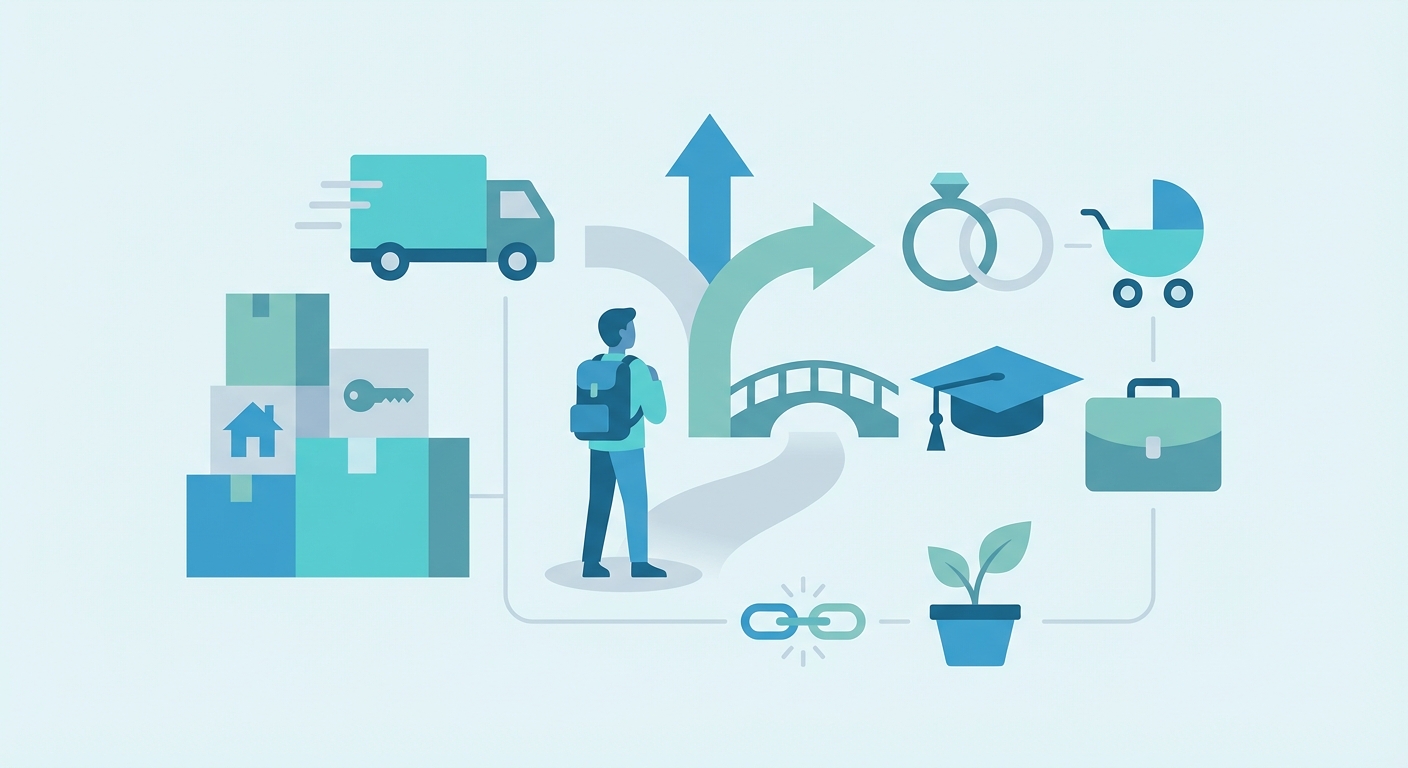
Moving a few miles down the coast in Carlsbad might seem like a simple logistical task, but even positive changes carry a hidden weight. You might find yourself staring at a stack of boxes or a new office desk while your heart races for no apparent reason. It’s a strange contradiction. You finally landed the promotion or moved into the dream house, yet sleep feels impossible and your mind won’t stop spinning through “what-if” scenarios. This isn’t just “stress” or a lack of gratitude. It is your nervous system reacting to a fundamental shift in your environment. These transitions force us out of our established patterns, and for many, that shift acts as a catalyst for significant anxiety.
The Neuroscience Behind Change-Related Anxiety
Your brain is essentially a prediction machine. It loves habits because they are energy-efficient and safe. When you follow the same routine every day, your brain can navigate the world on autopilot. However, when a major life change occurs, those old maps become useless. The amygdala, which serves as your brain’s alarm system, begins to fire more frequently because it can no longer predict what comes next. This heightened state of alertness is what we feel as that physical buzz of anxiety. It is your body trying to protect you from perceived threats in an unfamiliar environment.
During these times, the prefrontal cortex—the logical part of your brain—tries to make sense of the new data. But if the change is too rapid or too heavy, the emotional centers take over. This is often why what is emdr and how it helps becomes a relevant topic for those whose brains stay “stuck” in a high-alert state long after the actual change has passed. Without a predictable routine, your brain produces more cortisol and adrenaline, keeping you in a cycle of fight-or-flight that feels physically exhausting. You aren’t “weak” for feeling this way; your biology is simply working overtime to adapt to a new reality.
Common Life Transitions That Amplify Anxiety Symptoms
We often expect to feel anxious during “bad” changes, but “good” changes can be just as destabilizing. Major life transitions generally fall into a few key categories that disrupt our sense of self. Career shifts, such as a promotion or a job loss, are top contenders. Even when a promotion is earned, the “imposter syndrome” and new responsibilities can trigger a spike in anxiety. Relocation is another massive trigger, as it removes your social support network and familiar surroundings all at once. You lose your “local spots” and your physical grounding, which can lead to a profound sense of isolation and worry.
Relationship milestones also carry deep emotional weight. Getting married, becoming a parent, or navigating a divorce requires a total rewrite of your daily life and identity. In our practice, providing couples & individual in the Carlsbad area often reveals how these shifts strain our coping mechanisms. Other transitions might include health diagnoses or the transition into retirement. Each of these events requires you to say goodbye to an old version of yourself. When you are forced to re-evaluate who you are in a new context, anxiety typically fills the gap between the person you were and the person you are becoming.
How Our Attachment Styles Influence Response to Change
The way you handled change as a child often dictates how you handle it today. If you grew up with a secure attachment, you likely view change as a manageable challenge. You believe that even if things get difficult, you have the inner resources (and social support) to get through it. But for those with anxious or avoidant attachment styles, a major life change can feel like the floor is dropping out. Anxious attachment styles might lead you to cling to the past or seek constant reassurance from others to soothe the “new” feelings. You might fear that the change will lead to abandonment or a loss of love.
Avoidant attachment styles might respond to change by shutting down emotionally. Instead of feeling the anxiety, you might become hyper-focused on tasks or “numb out” to avoid the discomfort of the transition. This is where how ifs therapy by allowing you to identify these different “parts” of your personality that are trying to protect you. One part of you might be terrified of the new job, while another part is trying to act like everything is fine. Recognizing these internal dynamics is a huge step toward healing and regaining a sense of mental balance during a chaotic season.
The Role of Uncertainty in Escalating Worry and Fear
Uncertainty is the fuel that anxiety burns to stay alive. When we face a transition, we are forced to sit with the “unknown,” and for many of us, the unknown feels dangerous. You might find yourself “catastrophizing”—imagining the worst possible outcomes because your mind prefers a bad “certain” outcome over an “uncertain” one. This process of constant worrying is actually an attempt to gain control. If you can think of every possible problem, you feel (falsely) like you are prepared for them. But in reality, this just keeps your mental health in a state of perpetual intense distress.
This worry often mirrors the mourning process. You are essentially grieving the loss of your old life, even if the new one is better. Learning how do i and the uncertainty that follows is vital for long-term emotions management. Transitions are rarely prolonged without some level of fear, but when that fear starts to interfere with your daily functioning or physical health, it becomes a sign that the uncertainty has moved beyond a normal reaction. You might feel a prolonged sense of dread that doesn’t lift, making it difficult to engage with the very change you worked so hard to achieve. Understanding that uncertainty is a normal part of the healing timeline can help you be more patient with yourself as you find your footing again.
Recognizing Normal Adjustment Versus Clinical Anxiety
Expected Emotional Responses During Major Life Shifts
Moving to a new neighborhood in Carlsbad or transitioning into a different career phase naturally triggers a stress response in the brain. You might find yourself feeling slightly more irritable than usual or experiencing brief periods of restlessness as you try to find your rhythm. These reactions are part of a normal adjustment process where your mind is working overtime to map out new routines and social expectations.
It is perfectly common to feel a sense of longing for your old life or a bit of “buyer’s remorse” after making a big decision. Most people experience occasional nights of poor sleep or a fluttering in their chest when they think about the responsibilities ahead. These moments are usually fleeting and tend to decrease in frequency as the new situation becomes your new normal over the first few weeks.
Healthy adjustment often involves a mix of excitement and mild apprehension that does not stop you from performing your daily tasks. You might worry about making a good impression at a new job, but you still show up and contribute to meetings. When you are engaged in couples & individual, you learn that these initial waves of emotion are simply indicators that you care about your new circumstances. They are not necessarily signs that something is wrong with your mental health or your ability to cope.
Warning Signs That Anxiety Has Become Problematic
Anxiety transitions from a normal reaction to a problematic issue when it starts to dictate your choices and limit your freedom. If you find yourself avoiding local social gatherings or skipping important deadlines because the fear of failure feels paralyzing, the emotional response has likely overstepped its bounds. This shift happens when the “what if” thoughts become so loud that they drown out your logic and reasoning skills.
You might notice that your internal narrative has become strictly catastrophic, where every minor setback feels like an omen of total failure. While early adjustment involves temporary stress, problematic anxiety often leads to a persistent sense of dread that does not lift even when things are going well. This persistent state of high alert can make it impossible to enjoy the benefits of the life change you recently made.
Many individuals find that their social world begins to shrink as anxiety takes over their mental space. Using expert therapy helps people identify when their coping mechanisms, like withdrawal or perfectionism, have become counterproductive. If you are constantly seeking reassurance from others or spending hours ruminating on conversations you had earlier in the day, your anxiety has likely moved beyond the “adjustment” phase.
Duration and Intensity: When Adjustment Becomes Disorder
The timeline of your symptoms is one of the most reliable indicators of whether you are experiencing a temporary transition or a more entrenched disorder. Most mental health professionals look for a pattern that lasts longer than six months, though professional help is often beneficial much sooner if the intensity is high. If your distress remains at the same peak level weeks after the initial change, it suggests your nervous system is stuck in a loop.
Intensity refers to how much your symptoms interfere with your ability to function in your roles as a parent, partner, or employee. A normal adjustment might make you slightly distracted, but an anxiety disorder might make it impossible to focus on a single page of a report or engage in a conversation. When the emotional weight feels heavy every single day without any periods of relief, the situation has moved beyond simple stress.
We often see that people wait too long to speak with a professional because they assume they just need more time to settle in. However, if you are still feeling the same level of panic months after moving or changing jobs, it is time to look at deeper patterns. Understanding whether emdr therapy can may be useful for those whose anxiety is tied to specific past stressors that make current life transitions feel significantly more threatening.
Physical Symptoms That Signal Professional Intervention
Your body often signals a need for help before your mind is willing to admit it. Chronic physical tension is a common indicator that your anxiety has become a clinical concern rather than a passing mood. This might manifest as frequent tension headaches, a persistent clenched jaw, or digestive issues that seem to have no clear medical cause despite visits to a doctor.
Pay close attention to your sleep patterns and heart rate throughout the day. If you are experiencing heart palpitations while sitting at your desk or waking up at 3:00 AM with a racing mind every night, your nervous system is likely overloaded. These physical manifestations are the body’s way of shouting that it can no longer process the level of stress you are carrying on your own.
- Consistent muscle aches in the neck, shoulders, and back that do not respond to rest.
- Changes in appetite, such as a complete loss of hunger or significant overeating to soothe nerves.
- Shortness of breath or a feeling of “air hunger” during non-strenuous activities.
- Memory gaps or extreme difficulty concentrating on basic instructions.
When these symptoms become a daily occurrence, they can lead to long-term health complications if left unaddressed. Seeking professional support allows you to address the physiological roots of your anxiety before they lead to complete burnout. There is no reason to suffer through these physical tolls when targeted therapeutic interventions can provide significant relief and help you regain a sense of physical safety.
How Different Types of Life Changes Affect Mental Health
Career Transitions and Identity-Related Anxiety
Work consumes a massive portion of our daily lives, so it’s no surprise that changing your job can shake your mental foundation. Whether you just landed a promotion or faced an unexpected layoff, your brain interprets the shift as a threat to your stability. Many people in Carlsbad tie their self-worth directly to their professional titles or productivity levels.
But what happens when that title disappears or changes? You might find yourself grappling with imposter syndrome or a general sense of dread about the future. Career changes often force us to re-evaluate who we are without the familiar routine of an old office or a specific team of colleagues. This identity crisis is a major trigger for general anxiety.
And it isn’t just about the paycheck. Even “good” changes, like starting a dream business, bring a heavy load of new responsibilities that can feel suffocating. If you feel like your pulse quickens every time you open your laptop, your body is reacting to the pressure of the unknown. Professional couples & individual can help you separate your personal value from your job performance during these high-stress periods.
Relationship Changes: Marriage, Divorce, and Loss
Humans are social creatures, and our primary relationships act as our emotional anchors. When those anchors move, the resulting waves can be overwhelming. Marriage is often celebrated as a joyful milestone, but the reality of merging two lives, finances, and habits is a significant stressor that often leads to increased tension.
On the opposite side, divorce or the end of a long-term partnership can feel like the ground is falling away beneath your feet. You aren’t just losing a partner; you’re losing a shared future and a daily support system. This void is frequently filled by prolonged anxiety or deep sadness as you try to redefine your daily life alone.
Grief also plays a massive role here, even if the person is still living. You are mourning the loss of “how things used to be.” These emotional transitions are incredibly taxing on the nervous system. Seeking support during these times is not a sign of weakness, but a necessary step to ensure you don’t become stuck in a cycle of isolation or resentment.
Family Dynamics: Parenting Transitions and Empty Nest Syndrome
Family life is rarely static, and every new stage brings a fresh set of worries. Bringing a new baby home changes everything from your sleep schedule to your primary relationship. Many new parents feel a crushing sense of responsibility that manifests as hyper-vigilance or constant “what-if” thinking about the child’s safety.
As children grow, the stressors evolve. Parents often wonder is my teen’s or if the behavior they see at home is part of a larger issue. This stage of life requires a constant recalibration of your parenting style, which can be exhausting for everyone involved.
Then comes the transition of the empty nest. After decades of centering your world around your children, their departure can leave a startling silence. You might feel a loss of purpose or a sudden disconnect from your spouse. This shift requires building a new identity that isn’t solely defined by “Mom” or “Dad,” which is a difficult but vital process for your long-term mental health.
Health Changes and Aging-Related Anxiety
Facing a new medical diagnosis or simply noticing the physical effects of aging can be a profound source of distress. Health changes force us to confront our mortality and the limits of our bodies. This often leads to health-related anxiety, where every small ache or pain feels like the start of a major crisis.
Loss of mobility or independence is particularly difficult for those who have always prided themselves on being self-sufficient. You might worry about becoming a burden to your family or wonder how you will manage your daily needs. These are heavy, valid concerns that deserve professional attention and a safe space to be processed.
Aging also brings a unique set of social losses. As friends and peers deal with their own health struggles, your social circle might feel like it is shrinking. This isolation makes it much harder to cope with physical symptoms. Learning to adapt to a “new normal” regarding your health takes time, patience, and often some external guidance from a therapist.
Geographic Moves and Social Support Disruption
Relocating to a new city like Carlsbad might seem like a fresh start, but it also means leaving behind your established support network. You no longer have the neighbor you could call in an emergency or the lifelong friend who knows your entire history. This lack of “social capital” can make even small problems feel insurmountable.
The logistics of a move are stressful enough, but the emotional toll of being “the new person” is often underestimated. You have to put in significant effort to build new connections, find new doctors, and learn the layout of a new community. This constant state of being “on” can lead to social fatigue and heightened anxiety.
For parents, a move is even more complicated because you are managing your children’s transitions alongside your own. You might find yourself thinking my teen needs because they aren’t adjusting well to the new school. When the whole family is stressed, it becomes much harder for anyone to provide the emotional support that everyone needs. Acknowledging that the move is hard allows you to start the healing process rather than just trying to power through the discomfort.
Evidence-Based Therapeutic Approaches for Transition Anxiety
Cognitive Behavioral Therapy for Change-Related Thoughts
Change often triggers a cascade of “what-if” scenarios that can spiral quickly. When you are sitting in a quiet office in Carlsbad trying to make sense of a new job or a move, your brain might fixate on the worst-case outcomes. Cognitive Behavioral Therapy (CBT) focuses on identifying these specific thought patterns that fuel your distress.
Instead of letting a thought like “I am going to fail at this new role” take root, CBT teaches you to evaluate the evidence. Is that thought actually true, or is it just your nerves talking? By testing these assumptions, you can lower the physical symptoms of stress and regain a sense of control over your day.
Working with a professional through anxiety therapy helps you build a toolkit for these moments. You learn to catch the distortion before it becomes an overwhelming emotional wave. It is about replacing panic with a more balanced perspective that recognizes both the challenge and your ability to handle it.
This approach is highly practical and goal-oriented. You won’t just talk about the past, but rather focus on how you are reacting to the present. Over time, these sessions help you rewrite the internal script that says change is a threat, allowing you to see it as a manageable shift instead.
EMDR for Processing Traumatic Life Transitions
Not all life changes feel like simple “adjustments.” Some transitions, such as a sudden divorce or the loss of a loved one, can feel genuinely traumatic to the nervous system. Eye Movement Desensitization and Reprocessing (EMDR) is a specialized technique designed to help you process these high-intensity events without getting stuck in the past.
Sometimes the brain “freezes” a difficult memory, causing you to feel the same fear months later as if the event is still happening. EMDR uses bilateral stimulation, like guided eye movements, to help the brain move that memory into a healthier storage space. This reduces the emotional “charge” associated with the transition.
If you find that your individual therapy sessions need to go deeper into physiological reactions, EMDR might be the right fit. It doesn’t require you to talk in exhaustive detail about the event if that feels too painful. Instead, it focuses on how your body and mind hold onto that specific stressor.
Many people find that after a few sessions, the “alarm” in their chest stops ringing every time they think about the change. It allows for a level of healing that traditional talk therapy sometimes struggles to reach on its own. It is particularly effective for those who feel “stuck” in a cycle of hyper-vigilance or flashbacks after a major life upheaval.
Internal Family Systems Approach to Managing Multiple Reactions
Have you ever felt like one part of you is excited about a change, while another part is absolutely terrified? This internal conflict is exactly what Internal Family Systems (IFS) addresses. It views the mind as a collection of different “parts,” each with its own perspective and role in protecting you.
When you go through a major transition, your “manager” parts might try to over-plan every detail to keep you safe. Meanwhile, a younger, more vulnerable part might be feeling extreme sadness or grief over what was left behind. IFS helps you acknowledge all these voices without letting any single one take over the driver’s seat of your life.
By using couples & individual techniques rooted in IFS, you can start to lead from your “Self.” This is the calm, curious, and confident core of who you are. When you approach your anxiety with curiosity rather than frustration, the intensity of those anxious parts often begins to soften and relax.
This method is incredibly helpful for transition anxiety because it validates the complexity of your emotions. You don’t have to choose between being “happy” or “sad” about a move or a career change. You can be both, and IFS gives you the framework to hold space for all of it simultaneously.
Emotionally Focused Therapy for Relationship Transitions
Major life changes rarely happen in a vacuum, as they often ripple through our most important relationships. Whether you are navigating a new marriage, a breakup, or becoming a parent, these shifts can create friction. Emotionally Focused Therapy (EFT) looks at the attachment bonds between people and how change affects that security.
Anxiety often spikes when we feel disconnected from our partner or support system during a transition. You might find yourself picking fights or shutting down because the “old way” of relating doesn’t work anymore. EFT helps you identify the negative cycles you’ve fallen into and find a way back to a secure emotional connection.
This approach focuses on the “here and now” of your emotional experience. By expressing your underlying fears rather than just your surface-level frustrations, you can create a safer environment for both people. It turns the relationship into a source of comfort during the transition rather than another source of stress.
The goal is to foster a sense of “we are in this together,” which is the ultimate antidote to transition-based fear. When you know your partner has your back, the external world feels much less threatening. Whether you are in Carlsbad or anywhere else, having a solid relational foundation makes every life change significantly easier to navigate.
When to Seek Professional Mental Health Support
Red Flags That Indicate Therapy Is Necessary
Determining the line between normal adjustment stress and clinical anxiety can be tricky during a major life change. While everyone feels some level of nerves after a move to Carlsbad or a career shift, certain behaviors suggest your nervous system is stuck in a high-alert state. You might find that your worry has moved from the back of your mind to the driver’s seat of your life.
Physical symptoms are often the first sign that you need extra help. If you’re experiencing chronic insomnia, sudden panic attacks, or unexplained digestive issues, your body is likely signaling that the internal pressure is too high. These physical manifestations of anxiety rarely disappear on their own without intentional intervention and support.
You should also look at your social habits and productivity levels. Are you withdrawing from friends and family because the thought of socializing feels like a chore? When couples & individual becomes a topic of conversation, it is usually because the anxiety has started to erode personal relationships or job performance. If you can no longer complete daily tasks or find joy in hobbies you once loved, it is time to call a professional.
Emotional volatility is another major indicator. If you’re feeling explosive anger, deep hopelessness, or constant irritability, these are red flags. These intense emotions often mask a deeper inability to process the transition you are currently facing.
How Long to Wait Before Seeking Professional Help
The “wait and see” approach is common, but it often leads to prolonged suffering that could have been avoided. Generally, if your symptoms have persisted for more than two to four weeks without any signs of improvement, you don’t need to wait any longer. Life transitions are meant to be challenging, but they shouldn’t be paralyzing for months on end.
Early intervention is always better than waiting for a complete breakdown. Many people think they have to be in a total crisis to justify calling a therapist, but that simply isn’t true. Seeking help when you first notice your coping mechanisms are failing is a proactive way to prevent chronic mental health issues.
If the change involves a loss, such as a death or a divorce, specialized grief counseling can provide a structured way to walk through the mourning process. Waiting “until you feel better” is a paradox because the very tools needed to feel better are often found within the therapy room itself. You deserve support while you are in the thick of the struggle, not just after you have survived it.
Think about your baseline. If you feel like a completely different, more diminished version of yourself, that is your cue. There is no prize for suffering the longest before asking for help.
Finding the Right Therapist for Transition-Related Issues
Finding a therapist who understands the specific nuances of life transitions is essential for your progress. You want someone who recognizes that your anxiety isn’t just “in your head,” but is a direct response to your changing environment. Look for practitioners who list life transitions, adjustment disorders, or career stress as their primary areas of focus.
In a place like Carlsbad, you have access to various specialized modalities. For example, if your anxiety is rooted in past trauma that the recent life change has triggered, you might look into emdr therapy to help process those underlying memories. This approach can be particularly effective when traditional talk therapy feels like it’s hitting a wall. The goal is to find a clinician who offers the specific tools that match your unique internal struggle.
Don’t be afraid to interview potential therapists. Ask them how they approach big life shifts and what their philosophy is regarding anxiety management. A good therapist will welcome these questions and explain their methods clearly so you feel comfortable from the start.
Consider the logistics as well. Do you prefer online sessions for convenience, or do you need the physical presence of an office to feel grounded? Choosing a therapist whose schedule and location work for you reduces the friction of staying committed to your sessions.
What to Expect in Your First Therapy Sessions
Your first few sessions are mainly about building a foundation of trust and understanding. The therapist will likely ask many questions about your history, your current lifestyle, and the specific events that led you to reach out. It might feel a bit like an interview, but this data collection is vital for creating a customized plan for your healing.
You won’t be expected to solve everything in sixty minutes. In fact, most of the first session involves establishing goals. What do you want your life to look like in three months? How would you know if the anxiety was actually starting to lift? Setting these benchmarks early on helps you track your progress over time.
The therapist will also introduce you to their specific style. Whether they use cognitive-behavioral techniques or more mindfulness-based approaches, they will explain how these tools help regulate your nervous system. You will start to learn why your brain is reacting the way it is, which can be incredibly validating after weeks of feeling “crazy” or out of control.
Be prepared for some emotional heavy lifting. While the goal is to feel better, talking about difficult transitions can be tiring. It is normal to feel a bit drained after your first few visits, but this is a sign that you are finally doing the work to process the change rather than just running away from it.
Building Resilience and Coping Strategies for Future Changes
Developing Emotional Intelligence for Better Adaptation
Adapting to a new reality requires more than just grit. It requires a deep understanding of your own internal landscape. Emotional intelligence allows you to recognize the physical signs of anxiety before they spiral into a full-blown panic attack.
You might notice a racing heart or a tight chest early in the day. Understanding these signals helps you intervene before the stress becomes unmanageable.
Self-awareness is the foundation of this process. When you can name an emotion, you take away some of its power over your behavior. Instead of reacting blindly to stress, you can pause and ask what that specific feeling needs.
This level of insight is particularly helpful when navigating life transitions anxiety because it helps you distinguish between healthy caution and irrational fear. It makes the transition feel like something you are managing rather than something happening to you.
One effective way to deepen this internal connection is through ifs therapy which helps you identify different parts of your personality that react to change. Some parts of you might feel excited about a new job, while others are terrified of failure. Acknowledging all these voices prevents any single emotion from overwhelming your daily life. This balanced approach is essential for long-term emotional health.
By developing these internal skills, you stop viewing emotions as enemies. You start seeing them as data points that guide your decisions. This shift in perspective is what allows people to move through major losses or career shifts without losing their sense of self. It builds a foundation of confidence that remains steady regardless of external circumstances.
Creating Support Systems Before Major Transitions
Change often feels isolating even when it is a positive move. We often wait until we are drowning in stress to ask for help. A more effective strategy is to build your safety net before the ground starts to shift.
Think of your support system as a resource that provides both emotional validation and practical advice when things get difficult. This proactive approach reduces the impact of anxiety after change by ensuring you aren’t facing the unknown alone.
A strong support system includes diverse sources of help. You need the friend who listens without judgment, the mentor who offers professional guidance, and the family member who helps with daily tasks. But professional support is often the missing piece of the puzzle. Engaging in couples & individual during stable times can prepare you for the inevitable shifts that happen in life and relationships later on.
Don’t overlook the value of community groups or specialized counseling in Carlsbad. Local networks provide a sense of belonging that is often lost during major life changes. Whether you are moving to a new city or becoming a parent, finding others who are in the same stage of life can normalize your experience. Knowing that your struggle is a normal human response to change can significantly lower your baseline anxiety levels.
Remember that a support system is a two-way street. Building these connections ahead of time requires vulnerability and consistent effort. But the payoff is immense when you hit a rough patch. Having a pre-established team means you don’t have to explain your whole history while you are in the middle of a crisis. They already know you and can step in with the specific support you need.
Practical Skills for Managing Uncertainty and Change
Uncertainty is often the primary driver of anxiety. When the future is unclear, our brains tend to fill in the gaps with worst-case scenarios. To combat this, you need practical tools that anchor you in the present moment.
Grounding exercises are a perfect example of a skill that can be used anywhere at any time. Breathing techniques or sensory check-ins help pull your focus away from future worries and back to the current environment.
Routine is another powerful tool for managing a shifting timeline. When your external world is in flux, keeping small daily habits can provide a sense of control. This might be as simple as having coffee at the same time or sticking to a workout schedule.
These small anchors tell your nervous system that not everything is changing. It creates a “safe zone” of predictability in the middle of a chaotic week.
Setting realistic expectations is also vital. Many people expect themselves to perform at 100% capacity while grieving or moving houses. This is simply not possible. Lowering the bar for yourself during a transition is not a sign of weakness; it is a strategic move to prevent burnout. Focus on what is essential and let the rest go until you feel more grounded.
Finally, practice “radical acceptance” of the situation. This doesn’t mean you have to like the change. It simply means you stop fighting the reality of it. When you stop using your energy to protest the change, you can use that energy to adapt to it. This mental shift is often the difference between staying stuck in anxiety and moving forward toward healing.
Maintaining Mental Health During Ongoing Life Adjustments
Mental health is not a destination you reach and then ignore. It is a continuous process of maintenance. This is especially true after the initial shock of a major change has worn off. The secondary phase of an adjustment can be just as difficult as the first. This is the period where the “new normal” starts to feel permanent, and the lack of the old life becomes more apparent.
Consistency is your best friend during this phase. Continue checking in with yourself or your therapist even when things feel “fine.” Periodic sessions of couples & individual act as a tune-up for your emotional wellbeing. It prevents small stressors from accumulating into a larger crisis. Think of it as preventative care for your mind.
Pay close attention to your physical health as well. Sleep, nutrition, and movement are the pillars that support your mental health. When you are stressed, these are often the first things to go.
But without a rested body, your brain lacks the resources it needs to process complex emotions or make difficult decisions. Prioritizing these basics is a form of self-respect that pays dividends in your mental clarity.
If you find that your anxiety is starting to interfere with your work or relationships in Carlsbad, don’t wait to reach out. Professional help is a signs of strength, showing you are committed to your future. At New Growth Counseling, we provide the specialized support needed to navigate these difficult transitions.
You don’t have to figure it out alone. Reach out today to schedule a session and take the first step toward a more balanced life.
Key Takeaways:
- Emotional intelligence helps you catch anxiety early.
- Build your support networks before you actually need them.
- Daily routines provide essential anchors during times of chaos.
- Professional counseling offers a structured way to process deep changes.