
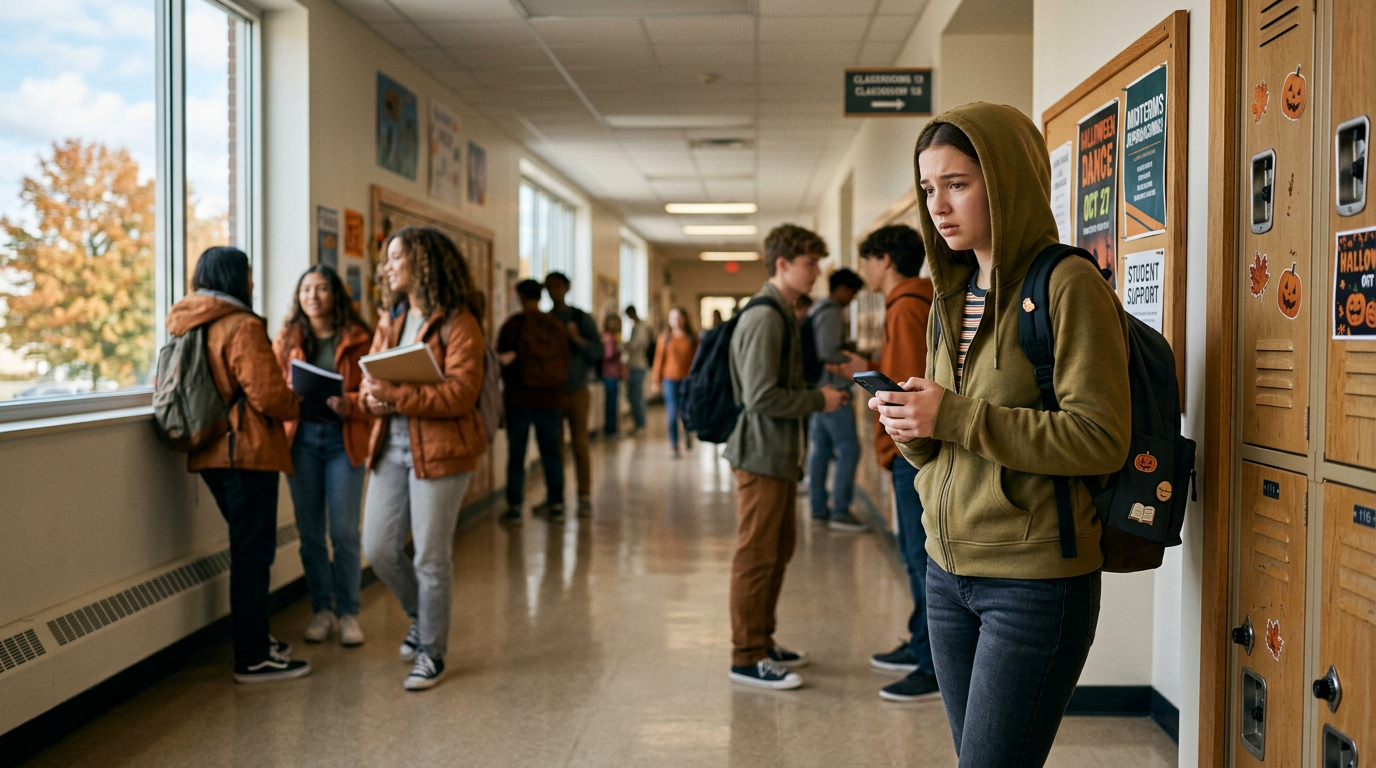
Understanding Why October Amplifies Anxiety in Adolescents
Your teen comes home from school with tension in their shoulders. The Halloween party invitations are piling up. Midterm grades are looming.
And something feels different this year, more intense than September. You’re noticing mood swings, sleep disruption, or that your kid seems perpetually wound up. October isn’t just about pumpkins and costumes.
For adolescents, it’s a convergence of stressors that can trigger or amplify anxiety in ways parents often don’t anticipate.
The truth is, October hits different for teens. It’s not one thing. It’s the collision of multiple pressures hitting simultaneously, and when you understand why this month becomes a lightning rod for anxiety, you can actually help.
The convergence of academic pressure and seasonal transitions
By October, the honeymoon phase of the school year is over. Summer feels ancient. The initial enthusiasm has worn thin, and suddenly grades matter.
Teachers are ramping up expectations. That’s when the academic weight becomes real. But here’s what most parents miss: October also marks a seasonal shift.
Days are noticeably shorter. The temperature drops. Sunlight changes quality and duration, triggering circadian rhythm adjustments that affect mood and energy levels.
This combination is powerful. Your teen’s brain is processing academic pressure while their biology is responding to reduced daylight. Research consistently shows that shorter days correlate with mood changes in adolescents, particularly those with anxiety predispositions. When these two factors collide, anxiety doesn’t just appear. It intensifies. Understanding that anxiety peaks during can help you recognize what’s happening isn’t just a bad week. It’s a predictable stress point.
Social dynamics intensify as the school year progresses
October is when friend groups solidify, shift, or fracture. Cliques that were fluid in September are hardening. Social hierarchies become more pronounced. For many teens, this means anxiety about where they fit, whether they belong, or if they’re being excluded from gatherings and inside jokes.
Unlike early school year friendships that are still forming, October relationships feel permanent. A perceived slight becomes a major threat. Being left out of a group chat feels like rejection.
This social stratification creates constant low-grade stress for adolescents who are already navigating complex peer dynamics. And here’s the real part: teens rarely tell parents about these shifts directly. Instead, you see withdrawal, irritability, or sudden anxiety about school events.
The social pressure is real even when it’s invisible to adults.
How Halloween and peer gatherings create additional stress
Halloween parties, friend hangouts, and autumn social events cluster in October. For some teens, these are exciting. For others, they’re anxiety-inducing landmines. There’s pressure to attend, pressure about costumes, pressure about drinking or risk-taking at parties, and anxiety about who will be there or how they’ll be perceived.
The expectation to be social becomes pronounced. FOMO (fear of missing out) peaks. Simultaneously, there’s anxiety about actually attending. What if I don’t fit in? What if I make an awkward comment? What if my costume is lame? For teens already managing anxiety, October’s social calendar feels relentless. There’s no escape hatch. Every weekend presents another event, another chance to feel anxious or left out. When family communication struggles, these pressures compound because teens feel they can’t talk to parents about what’s really bothering them, which why some families becomes increasingly important.
The role of circadian rhythm changes and mood fluctuations
This is biology, not weakness. In October, your teen’s sleep-wake cycle is shifting. Earlier sunsets trigger earlier melatonin release in some adolescents, but social schedules and screen time keep them up later.
The result? A mismatch between their body’s natural rhythm and their actual sleep schedule. Poor sleep amplifies anxiety exponentially.
A teen who’s exhausted perceives social threats more intensely, struggles with emotional regulation, and feels more irritable.
Additionally, the shift toward darker, cooler weather triggers biochemical changes. Serotonin and dopamine levels fluctuate with reduced sunlight exposure. For adolescents, this can manifest as increased anxiety, lower mood, or reduced motivation.
Combined with academic pressure and social stress, these circadian changes aren’t minor. They’re foundational to understanding why October anxiety feels different from September anxiety.
If your teen’s anxiety seems disproportionate this October, it’s worth taking seriously. These converging factors create a perfect storm, and getting ahead of it with adolescent counseling or wherever you are can make a meaningful difference in how they navigate not just October, but the rest of the school year.
Recognizing Signs of Anxiety in Teens During High-Stress Periods
Physical symptoms parents and educators often overlook
When teens experience heightened anxiety during October’s pressures, their bodies send clear signals. Yet these physical symptoms often get dismissed as typical teenage complaints or chalked up to growing pains.
Headaches become more frequent. Stomach issues spike without any obvious illness. Sleep patterns shift dramatically (either insomnia or excessive sleeping). Some teens report muscle tension, particularly in the neck and shoulders, or complain of feeling constantly fatigued despite getting adequate rest.
Parents might notice their teen rubbing their temples more often or holding their shoulders up around their ears. Educators see students wincing at their desks. The tricky part? These symptoms look like normal teen stuff, so they rarely trigger concern. But when combined with other behavioral changes, they paint a clearer picture of anxiety taking hold.
Appetite changes matter too. Some anxious teens stop eating much at lunch. Others develop a constant need to snack. Neither extreme is typical for them. Watch for teeth grinding at night (bruxism), frequent bathroom trips, or fidgeting that seems more pronounced than usual. When these physical manifestations cluster together during high-stress periods like October, anxiety gets worse.
Behavioral changes that signal emotional distress
Behavioral shifts often provide the clearest evidence of underlying anxiety. A teen who typically enjoys hanging out with friends might suddenly prefer staying home. Or they become more irritable than usual, snapping at parents over minor frustrations.
Procrastination intensifies dramatically. What used to be last-minute homework suddenly becomes weeks of avoidance. Some teens develop repetitive behaviors: excessive hand-washing, checking their phone constantly, or rearranging their room repeatedly. Others become more clingy, seeking reassurance from parents or trusted adults more frequently than before.
Changes in how they speak matter. Anxious teens often use more self-critical language. “I’m so stupid,” “I’m going to fail,” or “Nobody likes me” become common refrains. They might catastrophize minor events. A small mistake on a test transforms into “I’m ruined” thinking.
Avoidance behaviors escalate too. Suddenly refusing to attend social events, skipping school occasionally, or making excuses to skip specific classes signals that anxiety is running the show. Some teens show increased risk-taking or defiance as a way to cope. Understanding these patterns helps adults recognize when teen counseling becomes genuinely necessary rather than optional.
Academic performance shifts as anxiety manifests
October brings midterm season and intensified academic expectations. When anxiety takes hold, grades typically decline noticeably. But the timing and nature of this decline matter for distinguishing anxiety from other issues.
A student who previously maintained A’s and B’s suddenly earns C’s and D’s. Test scores drop even though their teacher reports they seemed prepared. Projects they worked on are incomplete or missing entirely. The student might blame themselves harshly for these changes, deepening their anxiety cycle.
Concentration suffers visibly. Teachers report that anxious teens struggle to focus during class despite apparent effort. They re-read paragraphs multiple times without retaining information. Test anxiety becomes paralyzing, sometimes triggering panic during exams. A teen might actually know the material but find their mind goes blank under pressure.
Assignment quality changes too. Writing becomes more scattered. Work shows signs of rushing rather than their typical careful approach. Some anxious teens attempt overly complex assignments as perfectionism kicks in, then abandon them halfway through, unable to meet their own unrealistic standards. This is where understanding how therapy becomes relevant.
Social withdrawal and changes in peer relationships
Anxiety often pushes teens toward isolation during a period when peer connection matters enormously. They might withdraw from friend groups, decline party invitations, or stop participating in activities they previously enjoyed.
Texting patterns change. They might still respond to messages, but the tone becomes flat or delayed. Initiating hangouts stops. They sit alone at lunch or position themselves at the edge of social groups rather than engaging fully.
Some anxious teens become hypervigilant about social acceptance. They overthink conversations, worrying they said something wrong. They check social media obsessively, comparing themselves to peers and catastrophizing about being excluded. Arguments with friends feel more loaded with meaning.
Confidence around others visibly decreases. A teen who once spoke up in class now stays silent. They might avoid specific people or situations where they fear judgment. Speaking to authority figures becomes harder. This social constriction compounds their anxiety, creating isolation that feeds the cycle. Recognizing when professional support becomes essential, whether through adolescent counseling near or other resources, helps interrupt this pattern before October’s pressures entrench deeper.
Navigating Social Pressure and Peer Dynamics
Understanding FOMO and its impact on teenage mental health
FOMO (fear of missing out) isn’t just a trendy acronym thrown around by parents trying to sound relatable. It’s a genuine psychological experience that hits differently for teens in October, when social calendars explode with Halloween parties, football games, and after-school hangouts. Your teen watches their friends post about events in real-time, sees group chats lighting up with inside jokes, and feels that gnawing anxiety about being left out or overlooked.
The impact on mental health is real. Research shows teens with elevated FOMO experience higher anxiety levels, lower self-esteem, and increased depression symptoms. October amplifies this because the season naturally creates more social opportunities. When your teen sees their peers attending something they weren’t invited to (or couldn’t attend), it can spiral into catastrophic thinking: “Nobody really likes me,” or “I’m always going to be the outsider.” These thoughts become the soundtrack to their anxiety.
What’s particularly challenging is that FOMO isn’t just about events anymore. It’s about perceived social status, which feels incredibly real to adolescents. Missing one weekend gathering might feel like social death, even though rationally everyone knows it won’t be. The emotional reality for your teen is what matters, and dismissing their concerns as “just FOMO” minimizes their experience.
Managing social comparison in the age of social media
Social media has fundamentally changed how teens experience peer dynamics. In October especially, Instagram and TikTok become highlight reels of costumes, parties, and social moments. Your teen isn’t just experiencing peer comparison in the hallway anymore—they’re experiencing it 24/7 through carefully curated feeds that show everyone else’s best moments.
The comparison trap works like this: your teen sees their classmate’s Halloween costume get 300 likes, or watches their friend’s group selfie at a bonfire get immediate engagement. Then they compare that to their own social media presence and feel inadequate. It’s not rational, and they know it intellectually, but emotionally it hits hard. Research indicates that excessive social media use correlates with higher anxiety and lower self-worth in adolescents, particularly during high-stress seasons like October.
What makes this worse is that social media shows only the highlight reel. Nobody posts about feeling lonely at a party or having awkward conversations. Your teen doesn’t see the authentic struggles—they see polished perfection. This distorted comparison creates a false narrative where everyone else seems happier, more connected, and more socially successful than they actually are.
Building authentic connections versus performative relationships
October’s social intensity often pushes teens toward performative relationships—friendships based on showing up, looking good, and playing a role rather than genuine connection. They might say yes to every party invitation not because they want to go, but because declining feels like social suicide. They might engage in activities that don’t align with their values just to stay in the group’s good graces.
The anxiety this creates is exhausting. Your teen is essentially running a performance all day, managing their image rather than being themselves. Over time, this performative approach to relationships actually increases anxiety because there’s always the fear that the “real” version of them (if discovered) wouldn’t be accepted.
Building authentic connections—friendships where your teen can be honest about their struggles, interests, and boundaries—is protective against anxiety. Real friends provide genuine support; performative relationships demand constant energy management.
Many teens benefit from adolescent psychology support to identify which relationships feel authentic versus which ones feel draining. A counselor can help your teen recognize the difference and make intentional choices about where they invest their social energy.
Setting healthy boundaries with peer groups
Boundaries are powerful, but they’re terrifying for teens. Setting boundaries with a peer group feels like social rejection or standing out as “difficult.” Yet without boundaries, October becomes a month of saying yes to everything, overcommitting, and burning out.
Your teen needs permission to decline invitations without lengthy explanations. They need to know it’s okay to have different interests than their friend group. They need to understand that setting boundaries is actually what builds self-respect and reduces anxiety long-term. When your teen operates without boundaries, they’re constantly anxious about maintaining the image they’ve projected. With boundaries, they can relax into being themselves.
Practical boundary-setting looks like: “I can’t go out this weekend, but I’m free next Friday,” or “I’m not comfortable with that conversation,” or simply, “That’s not really my thing.” These aren’t rejections of friendship—they’re invitations for real friendship based on honesty. Coaching your teen through this, or working with a counselor to practice these conversations, can significantly reduce social anxiety during peak season like October.
Word count: 798 words
School Stress and Academic Anxiety in Fall
Mid-semester assessments and their psychological impact
By mid-October, most teens face their first significant round of exams, quizzes, and project deadlines. This timing coincides with the shift into fall’s darker, shorter days, which compounds stress physiologically. Mid-semester assessments feel high-stakes because they often count toward semester grades, and that weight sits heavy in a teenager’s mind.
The psychological impact goes beyond simple test anxiety. When a teen receives a lower-than-expected grade on a mid-term exam, it can spiral into catastrophic thinking: “I’m going to fail this class. I won’t get into college.
My future is ruined.” This isn’t dramatic posturing. The adolescent brain genuinely struggles to compartmentalize setbacks and see them as isolated events rather than indicators of total failure.
Parents often notice behavioral changes around assessment periods. A usually chatty teen becomes withdrawn. Sleep patterns shift (either insomnia or oversleeping). Appetite changes. Some teens develop physical symptoms like stomach aches or headaches on test days. These aren’t character flaws. They’re your nervous system communicating that the perceived threat feels very real.
What makes October assessments particularly tricky is that they happen early enough in the semester that students still believe they can “recover” their grade through sheer effort. This false hope sometimes drives them to study habits that are counterproductive: all-nighters, skipping meals, pushing through fatigue. The attempt to regain control actually increases anxiety rather than reducing it.
Balancing extracurricular commitments with coursework
October is also when extracurricular activities hit their stride. Fall sports are in full swing. Debate teams are prepping for tournaments. Robotics clubs have competitions scheduled. Drama productions are ramping toward opening night. For many teens, these activities are what make school bearable, so they feel non-negotiable.
But here’s the reality: balancing serious academics with competitive extracurriculars is genuinely difficult, especially when mid-term assessments collide with playoff season or a major performance deadline. Teens often refuse to scale back because they fear losing their spot on a team or missing something important with friends.
The pressure intensifies when a teen’s identity becomes fused with a particular activity. A soccer player might believe that if they don’t make varsity, they’re worthless. A debate competitor might interpret not placing at a tournament as personal failure. When extracurriculars become status symbols rather than sources of joy, the mental load becomes crushing.
Parents in the Carlsbad area and surrounding communities sometimes feel pressure to maintain high activity levels as college prep, which gets communicated directly or indirectly to their teens. That parental stress about college admission often mirrors back to adolescents, amplifying their anxiety about whether they’re “doing enough.”
Perfectionism and unrealistic academic expectations
October reveals which teens are wrestling with perfectionism. These are often high-achieving students who’ve internalized the belief that anything less than an A is unacceptable, or that making a mistake means they’re fundamentally inadequate.
Perfectionism looks productive on the surface. A perfectionist teen might have immaculate notes, complete all homework early, and study for hours. But underneath, they’re often running on anxiety and fear rather than genuine interest. When perfectionism drives behavior, it creates a fragile system that collapses the moment performance dips.
Some perfectionistic teens experience what therapists call “performance anxiety,” where the gap between their internal standards and actual results creates unbearable distress. A teen who got a 95 percent on a test might genuinely feel devastated if they wanted a 98. That seems illogical to adults, but to the teen, it represents failure.
The concerning part is how perfectionism often masks deeper anxiety. Internal Family Systems by identifying the protective parts driving perfectionist behavior and the vulnerable parts underneath that fear judgment or rejection.
When school stress becomes clinical anxiety
Not all school stress is anxiety disorder. But October is when many teens cross the line from normal academic pressure into something clinically significant that needs professional support.
Red flags include: avoidance behaviors (not turning in assignments despite having done them, skipping classes), panic symptoms (heart racing, difficulty breathing, feeling faint before tests), significant sleep disruption affecting mood and functioning, or when a teen’s anxiety about school starts affecting their ability to do other things they normally enjoy.
If a teen’s anxiety about academics is persistent, causing visible distress, and not responding to reasonable management strategies at home, that’s the moment to consider couples & individual services. A qualified mental health professional can assess whether what a teen is experiencing is situational stress that will resolve naturally or whether it’s evolved into an anxiety disorder requiring treatment.
The earlier intervention happens, the better the outcomes. Teens who get support in October often find their anxiety decreases by November, which prevents the compounding stress of carrying unmanaged anxiety into the rest of the semester.
Therapeutic Approaches for Teen Anxiety
Cognitive-behavioral strategies for managing anxious thoughts
When October anxiety hits, teens often get stuck in thought loops. Their brain latches onto “what ifs” and worst-case scenarios like they’re facts instead of possibilities. Cognitive-behavioral therapy (CBT) helps break that cycle by teaching teens to identify the thought, question it, and replace it with something more realistic.
Here’s how it works in practice: A teen might think, “If I mess up my presentation, everyone will judge me and I’ll fail the class.” A therapist helps them examine that thought. What’s the evidence? Has every mistake led to failure?
What would actually happen if the presentation wasn’t perfect? Often, teens realize the catastrophe they’re imagining is unlikely. They replace that thought with something grounded: “I might be nervous, but I’ve prepared, and my teacher values effort.”
The key is catching these thoughts early and consistently. Teens can keep a thought record, jotting down what triggered their anxiety, what they thought, and what actually happened. Over time, they notice patterns.
Maybe social media comparison always fuels anxiety. Maybe certain friend groups trigger perfectionist spirals. Once they see the pattern, they can interrupt it before it spirals into panic.
Emotion-focused techniques to build distress tolerance
Sometimes the goal isn’t to eliminate anxiety entirely, it’s to help your teen tolerate it without it taking over their life. Emotion-focused therapy teaches teens that feelings are information, not commands. Anxiety is there for a reason (it’s trying to protect them), but it doesn’t have to dictate their behavior.
Building distress tolerance means developing skills to sit with uncomfortable emotions without immediately trying to escape or numb them. When a teen feels anxious before a social event, the urge is often to cancel or hide. Instead, distress tolerance techniques teach them to acknowledge the feeling, accept it’s temporary, and move forward anyway.
This might sound harsh, but it’s actually empowering. Teens realize they’re stronger than their anxiety.
Therapists often use the TIPP technique: temperature (splashing cold water on the face activates the calming response), intense exercise, paced breathing, and paired muscle relaxation. Or they might explore self-compassion practices, helping teens treat themselves like they’d treat a struggling friend rather than criticizing themselves for feeling anxious. When a teen can sit with discomfort without judgment, October’s pressures become manageable instead of overwhelming.
Mindfulness and grounding exercises for immediate relief
Mindfulness isn’t about clearing your mind or achieving zen. For anxious teens, it’s about noticing what’s happening right now without judgment. When anxiety spikes, teens often get pulled into past regrets or future fears. Grounding exercises anchor them to the present moment, where the danger their brain perceives isn’t actually real.
The 5-4-3-2-1 technique is simple but effective. Teens notice five things they can see, four they can touch, three they can hear, two they can smell, and one they can taste. This engages their senses and interrupts the anxiety spiral.
Box breathing (inhale for four counts, hold for four, exhale for four, hold for four) activates the parasympathetic nervous system, literally calming the body’s stress response. When a teen is sitting in class feeling panicked before a test, these tools work in minutes.
Some teens respond better to movement-based practices. Progressive muscle relaxation, gentle yoga, or even a walk while paying attention to their surroundings can shift their nervous system out of fight-or-flight mode. The beauty is finding which technique resonates with each teen. What works for one might feel forced for another.
Family-based interventions and support systems
Teen anxiety doesn’t exist in a vacuum. Parents often unknowingly reinforce anxious patterns by over-reassuring, accommodating avoidance, or modeling worry themselves. Family therapy addresses these dynamics directly. A therapist helps families understand how their communication patterns and boundaries affect the teen’s anxiety.
Sometimes parents’ own stress about their teen’s school performance or social standing fuels the pressure their teen feels. Working with parental anxiety becomes essential. Other times, siblings, extended family, or the family’s values around perfectionism drive anxiety. Family therapy creates space for these conversations.
Support systems also mean teaching parents how to respond effectively when anxiety emerges. Instead of immediately solving problems or allowing avoidance, parents learn to validate feelings while encouraging resilience. They set boundaries around reassurance-seeking, so the teen doesn’t become dependent on constant comfort.
And they model coping skills themselves. Teens notice when their parents handle stress with breathing exercises rather than spiraling.
Whether your teen needs individual counseling, family sessions, or both, these therapeutic approaches work best when they’re practiced consistently. October’s pressures are real, but with the right tools and support, teens can move through them with greater confidence and clarity.
Creating a Support Plan: When to Seek Professional Help
Identifying whether anxiety requires therapeutic intervention
Not every anxious moment during October calls for professional help, but knowing the difference between typical stress and clinical anxiety matters. Your teen might feel nervous about a Halloween party or worried about a chemistry exam. That’s normal. What you’re watching for is persistence, intensity, and whether the anxiety is interfering with their daily functioning.
If your teen is avoiding school, withdrawing from friends they usually enjoy, experiencing panic attacks, or showing signs of depression alongside the anxiety, that’s when professional support becomes essential. Anxiety that lasts for weeks, causes physical symptoms like stomach pain or headaches, or leads to compulsive behaviors (like excessive checking of grades or reassurance-seeking) suggests it’s time to reach out. The key question: is this temporary stress or something that needs expert intervention?
Finding the right therapist for your teen’s needs
Picking the right counselor for your teen isn’t just about finding someone with availability. You want someone trained in adolescent therapy who understands the specific pressures teens face in October (yes, seasonal and academic stress patterns matter). Look for therapists who specialize in anxiety, specifically those trained in evidence-based approaches like cognitive behavioral therapy or acceptance and commitment therapy.
Location and accessibility matter too. If you’re in the Carlsbad area, having a teen counselor nearby. Some teens connect better with therapists who have experience with particular issues, whether that’s social anxiety, perfectionism, or school-related stress. Don’t hesitate to ask potential therapists about their approach, their experience with teens your child’s age, and how they involve parents in the process. A good fit makes the difference between your teen opening up and them sitting silently for 50 minutes each week.
What to expect in the counseling process
The first session typically involves assessment. Your therapist will ask questions about when the anxiety started, what triggers it, how it shows up in your teen’s body and behavior, and what’s already been tried. They might ask about family history, school performance, social relationships, and sleep patterns. This isn’t an interrogation; it’s gathering information to build a real understanding of your teen’s unique experience.
Ongoing sessions then focus on building skills and exploring patterns. Depending on the therapeutic approach, your teen might learn to identify anxious thoughts and challenge them, practice relaxation techniques, gradually face feared situations in a controlled way, or explore what values matter most to them beneath the anxiety. Many therapists also include parent sessions or family conversations, because parents play. Some teens benefit from therapy that addresses underlying trauma or family dynamics alongside the anxiety itself. The pace varies, but most teens show noticeable shifts in how they handle October stressors within 8 to 12 sessions if they’re actively engaged.
Partnering with schools and family systems for holistic care
Therapy doesn’t happen in isolation. Your teen spends most of their day at school, where much of the anxiety gets triggered. A solid support plan includes communication with school counselors, teachers, and administrators about your teen’s anxiety needs.
Sometimes schools can offer accommodations like extra time on tests, a quiet space to decompress, or check-ins with a counselor between classes. This isn’t coddling; it’s meeting your teen where they are during a genuinely difficult period.
Family systems matter just as much. How parents respond to anxiety either reinforces it or helps build confidence. If family stress around academics, college applications, or social expectations is amplified in October, addressing that dynamic in family sessions can shift the whole household atmosphere.
When parents, therapists, and school staff are aligned in their approach, teenagers experience consistent support rather than mixed messages. They know their anxiety is being taken seriously, they’re not being pushed beyond their capacity, and they have multiple people believing in their ability to manage this season successfully.
If you’re noticing your teen’s October anxiety is affecting their relationships, grades, sleep, or general well-being, reaching out to a mental health professional isn’t admitting defeat. It’s recognizing that this particular moment is bigger than what your teen can handle alone, and that’s okay. New Growth Counseling works with teens throughout the Carlsbad region who face this exact challenge. Whether it’s your first time considering couples & individual services or you’ve been thinking about support for weeks, connecting your teen with professional help means they’re not white-knuckling through October by themselves anymore.
Related Posts
- When Grief Counseling Becomes Essential: Recognizing the Signs You Need Professional Support
- Why February’s Relationship Pressure Makes Anxiety Worse for Singles
- Why February Brings Social Anxiety About Romantic Status and Professional Support Options
- Why February’s Shorter Days Intensify Anxiety Symptoms and What Therapy Can Address
- How Mindfulness-Based Therapy Helps Young Adults Navigate Career Anxiety in 2026
- How Couples Can Navigate Financial Stress During Tax Season Together
- Why Some Families Struggle with Communication and How Therapy Helps